
Introduction
Vitamin C, also known as ascorbic acid, is an essential nutrient that supports a wide range of normal bodily functions. It contributes to healthy skin, blood vessels, bones, and cartilage, and plays an important role in iron absorption and immune support.
Vitamin C is most commonly obtained through food and oral supplements. In certain clinical contexts, it may also be administered by healthcare professionals using alternative medical routes. Each method differs in terms of absorption, practical use, and clinical considerations.
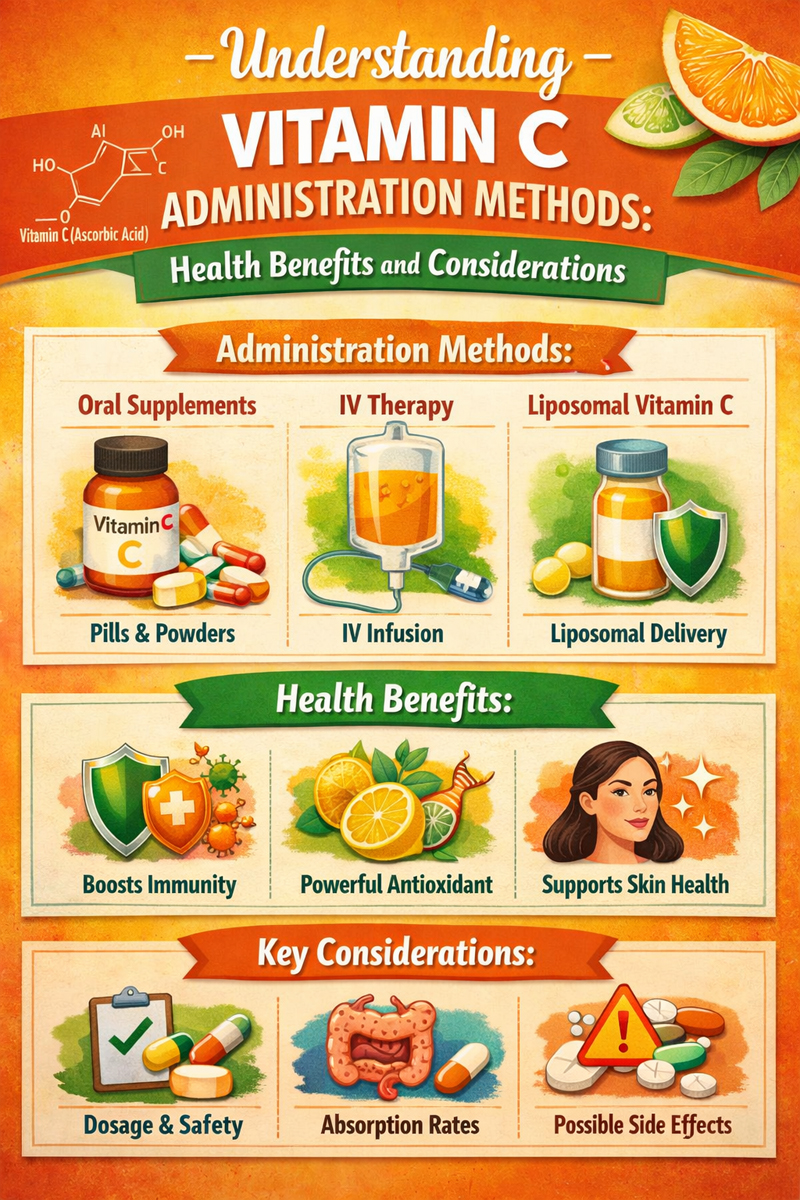
This article provides an educational overview of the commonly discussed methods of vitamin C administration, outlining their general characteristics, potential advantages, and limitations. It is intended for informational purposes only and does not replace professional medical advice.
Vitamin C health benefits:
Medline Plus – Vitamin C, also known as ascorbic acid, is an essential vitamin with a myriad of health benefits, including:
- Antioxidant Activity: Vitamin C is a powerful antioxidant that can neutralize harmful free radicals in the body. This helps to prevent oxidative stress, which is linked to many chronic diseases.
- Immune Function: Vitamin C plays a critical role in supporting the immune system. It stimulates the production of white blood cells and helps these cells function more effectively. It also supports the skin’s defense system by acting as an antioxidant directly in the skin, helping to protect it from environmental stressors like UV damage.
- Collagen Production: Vitamin C is vital for the growth, development, and repair of all body tissues. It’s involved in several body functions, including the formation of collagen, a protein that helps wounds heal. Collagen is also needed for healthy skin, hair, nails, and connective tissue.
- Iron Absorption: Vitamin C improves the absorption of non-heme iron, the type of iron found in plant-based foods. This is particularly beneficial for people on a vegetarian or vegan diet who may not get enough iron from their diet alone.
- Cardiovascular Health: Some studies suggest that vitamin C may help lower high blood pressure, which can reduce the risk of heart disease. It also appears to lower cholesterol levels and improve overall heart health.
- Prevention of Scurvy: While rare in developed countries, scurvy is a disease caused by a deficiency of vitamin C. Symptoms include fatigue, inflammation of the gums, joint pain, and anemia.
- Eye Health: Vitamin C plays a role in maintaining the health of the eyes, and some studies suggest that it may lower the risk of cataracts and age-related macular degeneration.
- Potential Cancer Protection: Some observational research has explored associations between vitamin C intake and certain health outcomes. These findings are not conclusive, and vitamin C should not be considered a treatment or preventive measure for cancer.
Oral Tablets
The most common method of vitamin C administration is through oral tablets or capsules. This is because it is non-invasive, affordable, and easily accessible. Many people consume vitamin C tablets as a dietary supplement for general health promotion and to boost the immune system, particularly during flu season.
The human body efficiently absorbs vitamin C in moderate amounts. However, the bioavailability of orally ingested vitamin C decreases with increasing dosage due to absorption limitations in the gastrointestinal tract. This is why mega-doses of oral vitamin C may not substantially increase its levels in the blood. Side effects of excessive oral intake can include gastrointestinal disturbances like diarrhea and abdominal cramps.
It’s also important to note that, while vitamin C supplementation can help fill nutritional gaps, it cannot replace a balanced diet. Whole foods not only provide vitamin C, but they also offer other essential nutrients that work synergistically for optimal health.
Intramuscular (IM) Vitamin C – Informational Overview
Intramuscular (IM) administration refers to vitamin C being delivered into muscle tissue by a trained healthcare professional in a clinical setting. This method is sometimes used when oral supplementation is unsuitable or ineffective, such as in cases of impaired digestion or absorption.
IM administration allows vitamin C to bypass the digestive system, which may result in different short-term blood concentration patterns compared to oral intake.However, this approach is not without limitations. It may cause local discomfort at the administration site and must always be carried out under appropriate medical supervision.
IM vitamin C is not intended for self-administration and is typically considered only when advised by a qualified healthcare provider. Individual needs, health status, and medical history all play an important role in determining whether this method is appropriate.
Intravenous (IV) Vitamin C – Informational Overview
Intravenous (IV) administration involves delivering vitamin C directly into the bloodstream via a vein and is performed exclusively in controlled medical environments. This method allows for the highest achievable blood concentrations of vitamin C and is therefore reserved for specific clinical scenarios.
IV administration is the most invasive method and requires careful monitoring by healthcare professionals due to potential risks, including fluid imbalance or vein irritation. As a result, it is not a routine approach and is only considered when deemed medically appropriate.
It is important to note that IV vitamin C is not a general wellness supplement and is not suitable for unsupervised or non-clinical use. Decisions regarding IV administration should always be made in consultation with a qualified medical practitioner, taking into account individual health needs and safety considerations.
Conclusion
Vitamin C can be obtained through a variety of methods, each with distinct characteristics and limitations. Oral supplementation remains the most widely used and accessible approach for maintaining adequate dietary intake in the general population.
Alternative administration methods, such as intramuscular or intravenous delivery, are discussed here for educational context only. These approaches are typically limited to specific clinical situations and must always be carried out under professional medical supervision.
Vitamin C should not be viewed as a substitute for a balanced diet or healthy lifestyle. Individuals considering supplementation or alternative administration methods should seek advice from a qualified healthcare professional to ensure safe and appropriate use.
This article is intended for general informational purposes only and does not constitute medical advice or a recommendation for any specific treatment or administration method.


